Author: Ti

  • L’Aquila & Abruzzo: The “Capital of Culture” Route

    Focus: Cultural rebirth, dramatic mountain fortresses, and the “Italian Tibet.”

    Day 1: Arrival in L’Aquila. Start at Piazza Duomo, the heart of the city’s reconstruction. Visit the Basilica of San Bernardino and the Fontana delle 99 Cannelle (Fountain of 99 Spouts).

    Day 2: Art & History. Explore the Spanish Fort (Forte Spagnolo) and the MuNDA (National Museum of Abruzzo). In the afternoon, check out the MAXXI L’Aquila for contemporary art in a restored palace.

    Day 3: The “Italian Tibet.” Drive 30 minutes to Campo Imperatore, a vast high-altitude plateau in the Gran Sasso. Take the cable car for panoramic views or visit the Astronomical Observatory.

    Day 4: Medieval Magic. Visit Rocca Calascio, one of the highest and most photogenic fortresses in Europe. Spend the afternoon in Santo Stefano di Sessanio, a perfectly preserved “albergo diffuso” (scattered hotel village).

    Day 5: Caves & Waterfalls. Head to the Stiffe Caves to see an active underground river. Continue to Sulmona, famous for its medieval aqueduct and “Confetti” (sugared almond) industry.

    Day 6: National Park Wilderness. Travel to Pescasseroli, the gateway to the Abruzzo National Park. Go for a guided hike to spot Marsican brown bears or Apennine wolves.

    Day 7: Lakeside Departure. Visit Scanno, known as the “heart-shaped lake.” Walk through the town’s narrow alleys where women still wear traditional black costumes, then return to L’Aquila or head toward Rome.
  • Northern Italy has always been the country’s economic and fashion engine

    Northern Italy 2026: Mountains, Modernity, and the Olympic Spirit
    Northern Italy has always been the country’s economic and fashion engine, but in 2026, it has transformed into a seamless “distributed” playground for global travelers. The hosting model for this year’s Winter Olympics isn’t confined to one city; it stretches from the urban spires of Milan to the jagged peaks of the Dolomites, creating a unique travel circuit that emphasizes sustainability and high-speed connectivity.

    1. The “Olympic Hubs”: Milan & Cortina
    The 2026 Games have turned the Milan-Cortina axis into a high-tech corridor.

    Milan: The city is currently buzzing with indoor ice events and cultural festivals. The new Olympic Village in Porta Romana is a model of urban sustainability, designed to be converted into student housing immediately after the games.

    Cortina d’Ampezzo: Known as the “Queen of the Dolomites,” Cortina has reclaimed its 1956 glory with upgraded “green” venues. It remains the peak of “Alpine Glamour,” where Michelin-starred dining meets world-class skiing.

    2. The Rail Revolution
    One of the biggest stories of 2026 is the High-Speed Rail expansion.

    New Connections: The high-speed line between Brescia, Verona, and Vicenza is now operational, significantly cutting travel times across the Po Valley.

    Sustainability: Italy has successfully positioned rail as the “cool” way to travel. With a 60% surge in international visitors this February, the government’s ban on airport strikes during the Olympic period has made the rail network the most reliable—and eco-friendly—spine for the region.

    3. The “Lakeside Luxe” Boom
    While the mountains are for the athletes, the lakes are for the “slow travel” connoisseurs. 2026 has seen a massive spike in luxury bookings:

    Lake Garda: Bookings are up over 40% as travelers seek out vineyard retreats and sailing.

    Lake Orta: This “hidden gem” is finally competing with Lake Como. Its car-free island, San Giulio, is the top choice for those looking to escape the Olympic crowds.

    4. Culinary Tourism & “Aperitivo Culture”
    Northern Italy’s food scene in 2026 is focusing on “Territorial Authenticity.”

    Valtellina: This region is gaining fame not just for snowboarding but for its “mountain traditions”—specifically pizzoccheri (buckwheat pasta) and thermal baths.

    Bologna & Parma: These remains the “Gastronomic Capitals.” In 2026, there is a trend toward “multi-destination foodie tours” where travelers take the train between these cities specifically for aged Parmigiano-Reggiano and balsamic vinegar tastings.

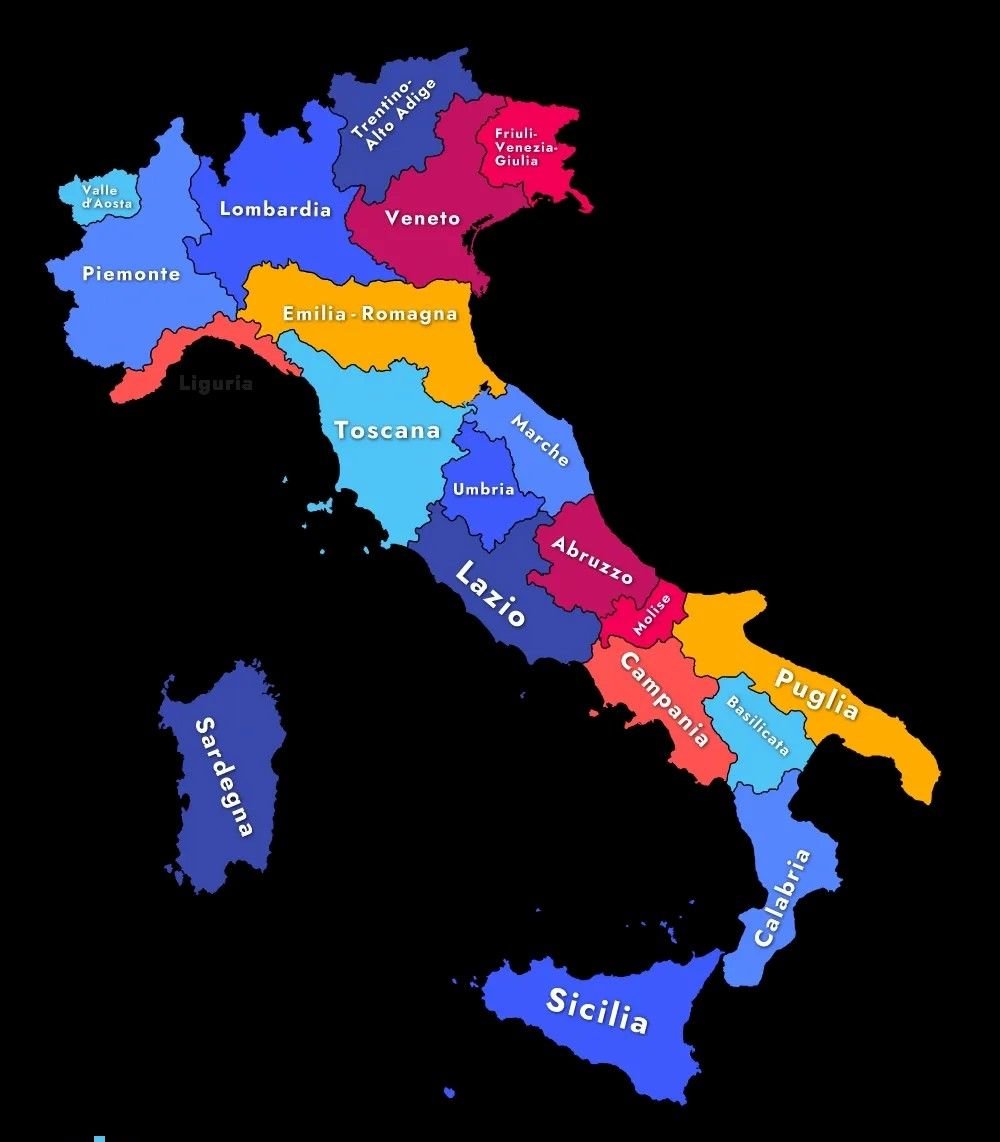
  • Regions of Italy

    Regions of Italy

    Italy consists of 20 administrative regions, each showcasing unique cultures, landscapes, and cuisines, varying from Alpine mountains in the north to Mediterranean islands. Five regions (Sicily, Sardinia, Valle d’Aosta, Trentino-Alto Adige, Friuli-Venezia Giulia) have special autonomy, while 15 function under regular laws.

    Regions of Italy (by Geographical Division):

    Northern Italy:
    Aosta Valley (Valle d’Aosta): Alpine region bordering France/Switzerland.
    Piedmont (Piemonte): Home to Turin, famous for wine and truffles.
    Liguria: Coastal region known for the Italian Riviera and Genoa.
    Lombardy (Lombardia): Economic hub with Milan and the Lakes.
    Trentino-South Tyrol (Trentino-Alto Adige): Autonomous region in the Dolomites.
    Veneto: Features Venice and Verona.
    Friuli-Venezia Giulia: Bordering Austria and Slovenia.
    Emilia-Romagna: Culinary center with cities like Bologna and Parma.

    Central Italy:
    Tuscany (Toscana): Renowned for Florence, art, and vineyards.
    Umbria: Known as the “green heart” with medieval towns.
    Marche: Features Adriatic beaches and rugged mountains.
    Lazio: Home to Rome, the national capital.
    Abruzzo: Known for mountainous national parks.

    Southern Italy:
    Molise: A small, rugged region.
    Campania: Features Naples, Pompeii, and the Amalfi Coast.
    Apulia (Puglia): Known for olive groves and whitewashed towns.
    Basilicata: A mountainous, rustic region.
    Calabria: The “toe” of the boot, known for beaches and spicy food.

    Insular Italy (Islands):
    Sicily (Sicilia): Largest Mediterranean island with diverse history.
    Sardinia (Sardegna): Known for pristine beaches and ancient ruins.

    Key Facts:
    Special Statute Regions: These five (Sicily, Sardinia, Valle d’Aosta, Trentino-Alto Adige, Friuli-Venezia Giulia) have greater legislative and financial autonomy due to cultural or geographical uniqueness.
    Capital Cities: Each region has a capital, such as Milan (Lombardy), Venice (Veneto), Florence (Tuscany), and Naples (Campania).

  • Italy Citizenship By Investment

    Italy does not have a direct Citizenship by Investment (CBI) program, but it offers a “Golden Visa” Residency by Investment scheme that provides a pathway to citizenship. Non-EU investors can obtain a 2-year residency permit by investing €250,000–€2 million, which can lead to permanent residency after 5 years and citizenship via naturalization after 10 years.

    Investment Options for Italian Residency
    To qualify for the Investor Visa, applicants must choose one of the following:
    €250,000 in an innovative startup.
    €500,000 in equity instruments of an Italian limited company.
    €1,000,000 in a philanthropic donation/project.
    €2,000,000 in Italian government bonds.

    Path to Citizenship (10-Year Timeline)
    Visa & Permit (Year 0): Obtain the 2-year Investor Visa.
    Renewal (Year 2): Renew the permit for another 3 years.
    Permanent Residence (Year 5): Apply for permanent residency after 5 years of living in Italy.
    Citizenship (Year 10): Apply for citizenship through naturalization, requiring B1 language proficiency, integration into Italian society, and no criminal record.

    Key Requirements & Considerations
    No Direct Citizenship: Investment only provides legal residency.
    Restrictions: The program is currently suspended for Russian and Belarusian citizens.
    Documentation: Proof of funds and a legal, clean source of wealth are required.
    Tax Implications: Residents must pay taxes on worldwide income.
    Dual Citizenship: Italy allows dual citizenship, meaning you do not have to renounce your current nationality.

    Note: The process involves a two-step approach: securing a “no impediment” certificate for the visa, followed by applying for the residency permit within 3 months of entering Italy.